A gentle, eco-friendly way for life to return to nature
Let your beloved companion rest peacefully in the embrace of water
Aquamation (scientifically known as Alkaline Hydrolysis) is a green farewell technology that uses 95% water and 5% alkaline solution (potassium/sodium hydroxide) in a 80–100°C low-temperature, ~4 atm sealed chamber to simulate natural decomposition. The entire process takes 6–8 hours, with carbon emissions at only 10% of traditional cremation and approximately 90% bone preservation.
A green farewell technology that uses 95% water and 5% alkaline solution,
in a 80–100°C low-temperature sealed chamber, to simulate natural decomposition over 6–8 hours.
Scientific Name Aquamation's scientific name is "Alkaline Hydrolysis." In the international funeral industry, it is also known as Aquamation, Resomation, or Bio-cremation. The principle uses potassium hydroxide (KOH) or sodium hydroxide (NaOH) alkaline solution in a sealed chamber under heat and pressure to simulate natural decomposition.
Origin Developed by Albany Medical College in the USA in the 1990s, originally used for medical body donation programs. Since 2003, it has been approved for human and pet funeral services and has become an internationally recognized green farewell technology.
International Use Currently legal in over 20 countries including the USA (25+ states), Canada, UK, Australia, Mexico, Netherlands, Ireland, and South Africa. Since 2017, it has been included in the UK NHS's standard body disposition methods.
Reaction Products The end products of aquamation are water, amino acids, peptides, and mineral salts—all in sterile liquid form. They are non-toxic and biodegradable. After pH neutralization, they can be safely discharged according to environmental regulations, returning to the natural water cycle.
Every value meets international Alkaline Hydrolysis standards
| Parameter | Value | Notes |
|---|---|---|
| Scientific Name | Alkaline Hydrolysis | Also known as Aquamation, Resomation, Bio-cremation |
| Process Temperature | 80–100°C | Far below cremation's 800–1000°C |
| Process Pressure | ~4 atm | Maintains liquid reaction conditions in sealed chamber |
| Solution Composition | 95% water + 5% alkaline | Potassium hydroxide (KOH) or sodium hydroxide (NaOH) |
| Process Duration | 6–8 hours | Adjusted based on size and equipment type |
| Bone Preservation | ~90% (8–10% of body weight) | Cremation: only 1–3% |
| Microchip Retention | ~70% | Cremation: 0% (destroyed by heat) |
| Carbon Emissions | ~30 kg CO₂e | Cremation average: ~320 kg CO₂e per cycle |
| Energy Consumption | 10–15% of cremation | Source: Mayo Clinic comparative study |
| Reaction Products | Water, amino acids, peptides, mineral salts | Sterile, non-toxic, biodegradable |
| Air Pollution | Zero emissions | No PM2.5, no combustion CO₂, no heavy metal release |
From pickup to delivery, the entire process takes approximately 24–48 hours
Free pickup in Taipei area after family's call.
Immediate / 24 hrPlaced in cold preservation room; service plan confirmed.
~30 minWarm water bath; fur sample preserved if requested.
~1 hrAlkaline hydrolysis at 80–100°C in sealed chamber.
6–8 hrBones dried in temperature-controlled equipment.
~4 hrLow-speed grinding into 1–3 mm fine granules.
~30 minDirector personally delivers ashes and keepsakes.
~30 minWe choose the gentle way to honor their final dignity
| Parameter | Cremation | Aquamation |
|---|---|---|
| Process Type | High-temperature flame combustion | Alkaline hydrolysis (KOH / NaOH) |
| Temperature | 800–1000°C | 80–100°C |
| Carbon Emissions | ~320 kg CO₂e | ~30 kg CO₂e |
| Energy Consumption | ~285 kWh equivalent natural gas | ~40 kWh electricity |
| Air Pollution | CO₂, PM2.5, dioxins, mercury | Zero emissions |
| Bone Preservation | 1–3% body weight (fragmented) | 8–10% body weight (intact) |
| Microchip Retention | 0% (destroyed by heat) | ~70% (preserved as keepsake) |
| Process Time | 1.5–2 hours | 6–8 hours |
| Byproducts | Smoke, ash, CO₂ | Water, amino acids, peptides, mineral salts |
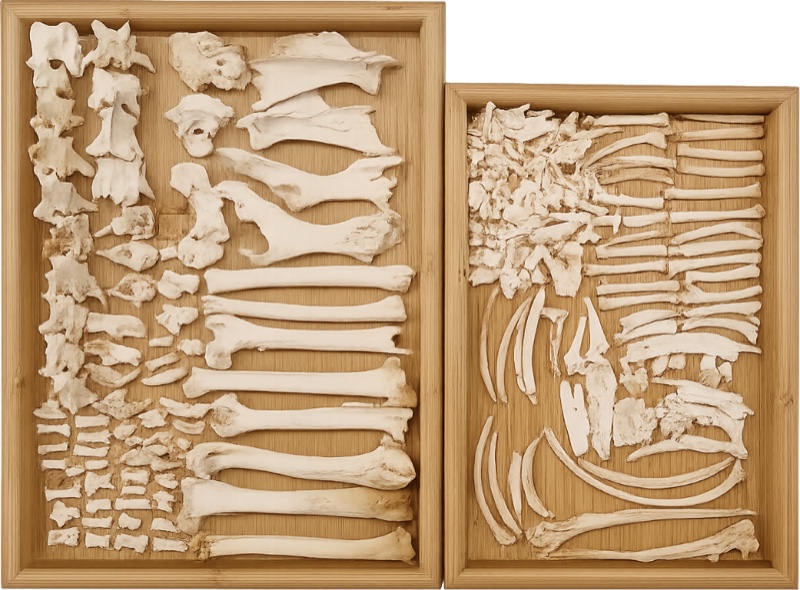
The bones after aquamation are primarily composed of calcium phosphate, with a soft, pure white intact structure. Compared to cremation ash, they are whiter, with no charred fragments. After low-speed grinding, they become 1–3 mm fine granules—not powdery—and can be safely stored in urns, jewelry, or other keepsakes.
Preserves natural texture of the calcium phosphate bone structure.
Entire process in sealed environment; no combustion dust or heavy metal residue.
Far more than cremation (1–3%); can be stored in urns or made into memorial jewelry, seed balls, etc.
Cremation's high heat destroys all microchips; aquamation's gentler temperature lets you keep the physical chip as a meaningful keepsake.
Choosing aquamation is choosing a better future.
Reduce carbon emissions, save energy, minimize waste—let love and the Earth endure together.
We believe that love for our companions should extend to the planet we all share.
Moon Sea Aqua Memorial operates under international standards and local regulations
Pet aquamation in Taiwan complies with Article 22 of the Animal Protection Act and local government pet funeral regulations. Moon Sea holds legal animal remains processing permits, with equipment certified for wastewater discharge, sealed operations, and harmless waste treatment. Every batch is fully documented and traceable.
Aquamation is a legal funeral option in the USA (25+ states), Canada, UK, Australia, Mexico, Netherlands, Ireland, South Africa, and more. Since 2017, the UK NHS has included it as a standard public medical body disposition method, and it is accepted by religious denominations including the Anglican and Methodist churches.
Aquamation equipment meets U.S. EPA (Environmental Protection Agency) emission standards and the spirit of ISO 14001 environmental management systems. Moon Sea uses food-grade potassium hydroxide (KOH) as the alkaline solution. Reaction products are water, amino acids, peptides, and mineral salts—non-toxic and biodegradable, safely discharged after pH neutralization per environmental regulations.
9 most frequently asked questions about aquamation
Aquamation's scientific name is Alkaline Hydrolysis. In the international funeral industry, it is also known as Aquamation, Resomation, or Bio-cremation.
The principle uses 95% water and 5% alkaline solution (potassium hydroxide KOH or sodium hydroxide NaOH) in a 80–100°C, ~4 atm sealed chamber to simulate decades of natural decomposition within 6–8 hours. Developed by Albany Medical College in the USA in the 1990s.
Three key differences:
1. Temperature: Aquamation 80–100°C, Cremation 800–1000°C.
2. Carbon Emissions: Aquamation ~30 kg CO₂e per cycle, Cremation ~320 kg CO₂e (90% reduction).
3. Bone Preservation: Aquamation preserves ~8–10% of body weight with intact structure, Cremation only 1–3% with fragmented bones. Aquamation also has zero air pollution—no smoke, PM2.5, dioxins, or heavy metal emissions.
No. After aquamation, bones are a soft, clean calcium phosphate structure. After low-speed grinding, they become approximately 1–3 mm fine granules—whiter and purer than cremation ash. They are not powdery and can be safely stored in urns or made into keepsakes (memorial jewelry, seed balls, bone porcelain, etc.).
Yes, it's legal. Pet aquamation in Taiwan complies with the Animal Protection Act and local government pet funeral regulations. Moon Sea Aqua Memorial holds legal animal remains processing permits, with equipment certified for wastewater discharge and sealed operations.
Internationally, aquamation is legal in the USA (25+ states), Canada, UK, Australia, and over 20 other countries. Since 2017, the UK NHS has included it as a standard public medical body disposition method.
A single aquamation cycle takes approximately 6–8 hours, adjusted for pet size. Including pickup, confirmation/placement (30 min), bathing/grooming (1 hr), drying (4 hr), grinding/sealing (30 min), and ash delivery, the entire process from pickup to family delivery is typically completed within 24–48 hours. Urgent requests can be coordinated with our service team.
No. The end products of aquamation are water, amino acids, peptides, and mineral salts—all in sterile liquid form. After pH neutralization, they can be safely discharged according to environmental regulations.
The process produces zero air pollution: no combustion CO₂, no PM2.5, no dioxins, no mercury or heavy metal release. The entire process is conducted in a sealed chamber, completely isolated from the external environment.
According to comparative studies by Mayo Clinic (USA) and Resomation (UK):
Energy consumption: Aquamation uses ~40 kWh of electricity per cycle, while cremation uses ~285 kWh of equivalent natural gas (saving ~85%).
Carbon footprint: Aquamation ~30 kg CO₂e, cremation ~320 kg CO₂e (~90% reduction). Processing 1,000 pets per year would reduce ~290 metric tons of CO₂e.
The key is the temperature difference. Cremation's 800–1000°C high heat causes bone minerals to embrittle, crack, and fragment, leaving only 1–3% of body weight as residue.
Aquamation's 80–100°C is only sufficient to break down soft tissue (proteins, fats). The bone's calcium phosphate (Ca₃(PO₄)₂) structure remains nearly intact, with residue being approximately 8–10% of body weight—pure white, fully preserved, and natural in texture.
There's a good chance. In traditional cremation (800–1000°C), pet microchips are completely destroyed, with 0% retention.
Aquamation's gentler low-temperature (80–100°C) alkaline environment preserves the physical microchip approximately 70% of the time.
Why might 30% not be preserved? The microchip's plastic or glass casing can deform under prolonged alkaline solution exposure, and the chip's readability may be impaired. Even when the chip is no longer readable, many families keep the physical chip as a meaningful keepsake—a permanent imprint of their companion's identity.
Now that you understand aquamation, browse our service plans,
or contact us directly to speak with a professional funeral director.